Use your closest shape reading to choose where to add volume, where to keep the silhouette quiet, and how to frame the forehead and jaw. Personal texture and preference still come first.
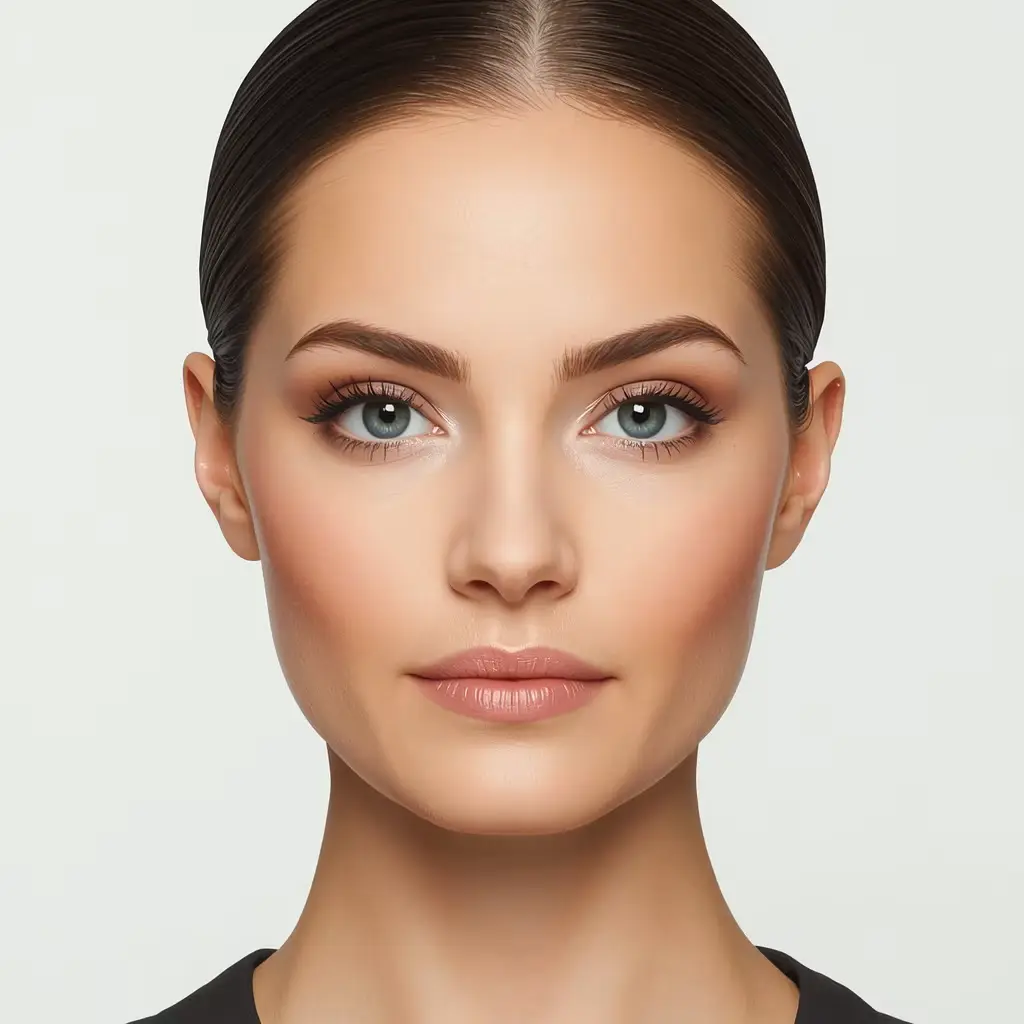
HeartA wider upper face with a softly tapered chin.
Portrait studyTriangle
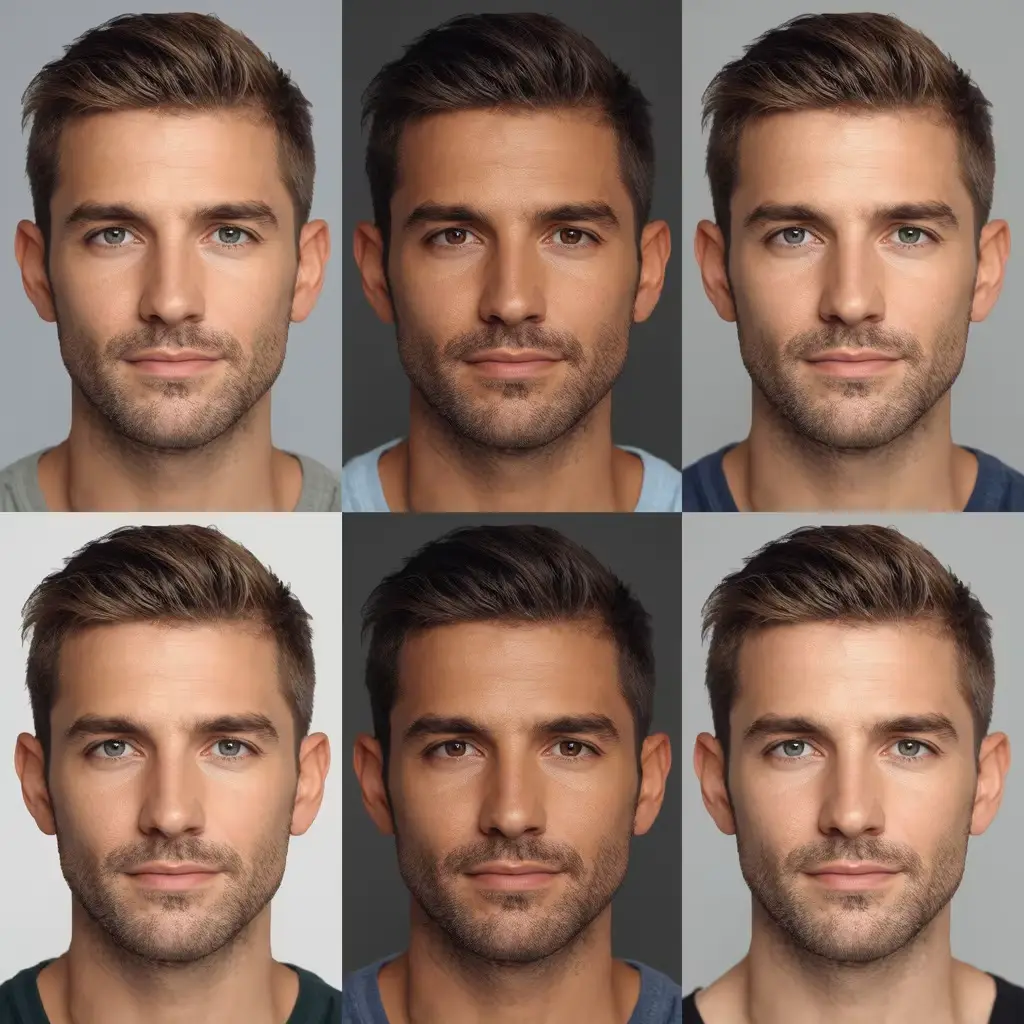
TriangleA six-portrait study of a stronger lower face.
Portrait studySquare
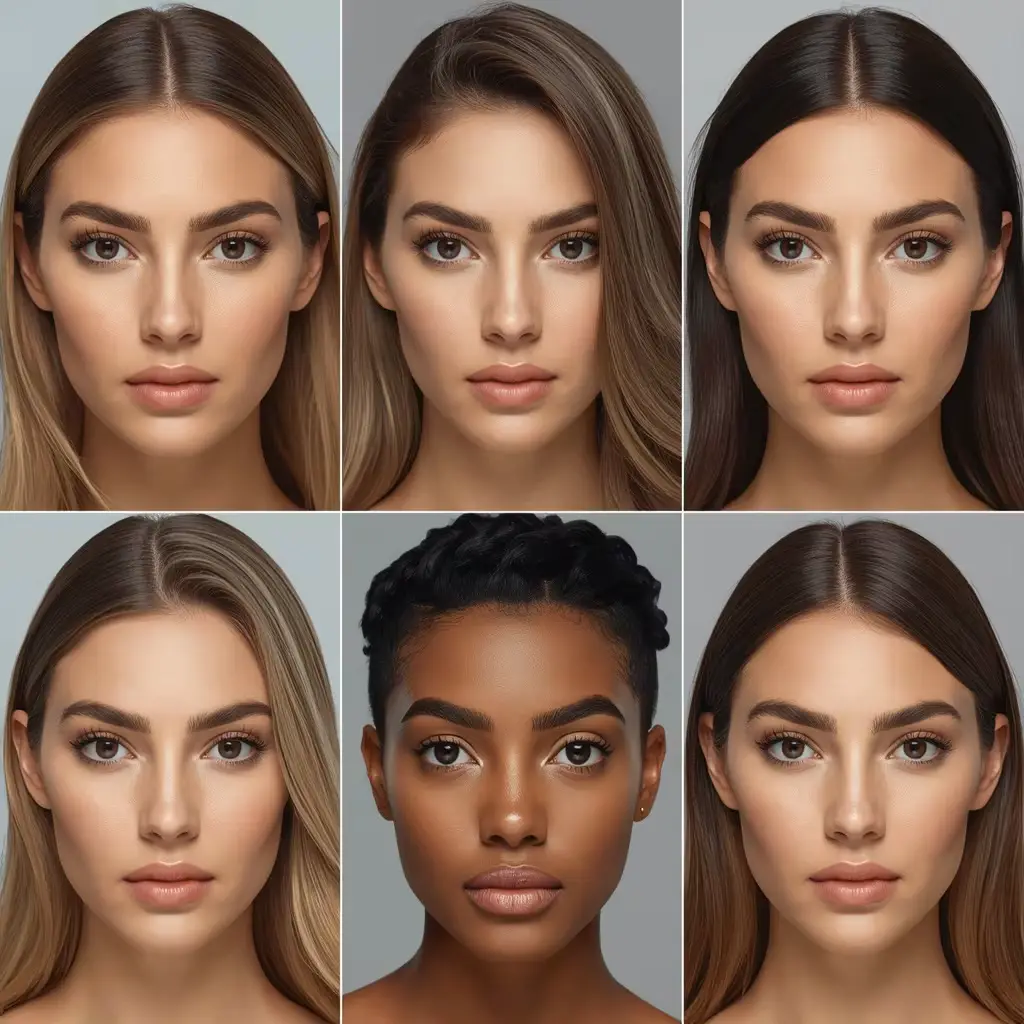
SquareA six-portrait study of balanced widths and defined jawlines.
AI-generated reference portraits. A silhouette can show the direction, but your hair texture and growth pattern decide how it behaves.
The useful variables
Width, height, and where the eye lands.
Face-shape hair advice is mostly about silhouette. A cut can add width at the temples, create height at the crown, or place a horizontal line near the jaw. The labels are just shorthand.
If the face is compact
Vertical lift and an open forehead usually create more length than a heavy, wide fringe.
If the face is long
Horizontal movement, layers, and volume at the sides can break up the vertical line.
If the jaw is strong
Soft curves, asymmetry, and face-framing pieces reduce the emphasis on the corners.
If the forehead is wide
A curtain fringe or side sweep can soften the upper width without hiding the whole face.
What to tell a stylist
Bring the shape reading and the measurements, not just the label. A useful brief sounds like: “My cheek-to-jaw ratio is on the higher side, and I want a cut that adds a little width at the jaw without a heavy fringe.” That gives a stylist something concrete to work with.
Hair density, curl pattern, growth direction, and styling time matter more than a geometric label. A cut that ignores your texture will not behave the way a photo suggests. Use the guide as a shortlist, then adapt it to the hair you actually have.
If you are between two shapes
Choose the direction that solves the visual problem you notice most. If you want more length, borrow from the round-face suggestions. If you want less jaw emphasis, borrow from the square-face suggestions. You do not need to commit to one category.