Real Face Shape Detector

Hair guide

Hair is a proportion tool, not a rulebook.

Use your closest shape reading to choose where to add volume, where to keep the silhouette quiet, and how to frame the forehead and jaw. Personal texture and preference still come first.

Filter by shape

12 options across all seven readings

Soft layered lob

A collarbone-length cut with invisible layers and a slightly irregular ends line.

Adds a little width lower down without a hard horizontal block. Works especially well when the jaw is narrower than the cheeks.

medium lengthlayerslow volume

Suggested for: Oval · Heart · Oblong

Textured crop

Short on the sides with piecey texture and a slightly longer fringe.

Keeps the silhouette clean while the fringe breaks up a long forehead or a strong square hairline.

shorttexturelow maintenance

Suggested for: Oval · Square · Diamond · Triangle

Curtain fringe

A centre-parted fringe that curves away from the cheekbones.

Softens a wide forehead and adds width at the temples, which can balance a tapered jaw.

fringemedium lengthsoftness

Suggested for: Oblong · Square · Heart · Triangle

Side part with crown volume

An off-centre part with lift at the root and a little sweep across the forehead.

The asymmetry and height interrupt a compact outline; the sweep keeps the forehead from looking too exposed.

volumeasymmetricclassic

Suggested for: Round · Square · Triangle

Chin-length bob

A blunt or gently graduated bob that ends near the jaw.

Creates a deliberate line at the lower face. Best when you want to add presence at the jaw rather than hide it.

shortbobdefinition

Suggested for: Oblong · Oval · Heart

High-crown pixie

Short sides with longer, textured length on top.

Vertical lift draws the eye upward and can make a compact face feel longer without adding side width.

shortvolumelow maintenance

Suggested for: Round · Heart · Diamond

Shoulder-length waves

Loose waves with face-framing pieces that start below the cheekbone.

The horizontal movement and soft ends balance a long face or a wider jaw.

medium lengthwavessoftness

Suggested for: Oval · Oblong · Triangle

Curly shag

Layered curls with a rounded silhouette and a lighter fringe.

The layered volume is easy to distribute around the temples and jaw, so it can balance both narrow and wide lower faces.

curlylayerstexture

Suggested for: Round · Square · Oval · Triangle

Slick back with temple width

A smooth back sweep with a little width left at the temples.

Keeps the forehead open while preventing the upper face from looking pinched, which helps diamond and triangle proportions.

shortsleektemple width

Suggested for: Diamond · Triangle · Square

Long layers with face-framing

Long hair with layers that begin around the cheekbone or chin.

The face-framing pieces soften a long outline and add a little width exactly where you place them.

longlayersface framing

Suggested for: Oblong · Heart · Triangle · Oval

Asymmetric fringe

A deep side part with a diagonal fringe across the forehead.

Breaks up symmetry and softens a strong jaw or a round cheek line without adding volume at both sides.

fringeasymmetricsoftness

Suggested for: Round · Square · Heart

Clean buzz or crew cut

A very short, even cut with a tidy hairline and optional fade.

Keeps the face fully visible. It can look especially clear on oval and diamond proportions with a defined jaw.

shortminimaldefined

Suggested for: Oval · Diamond · Square

Reference directions

Where the volume sits changes the read.

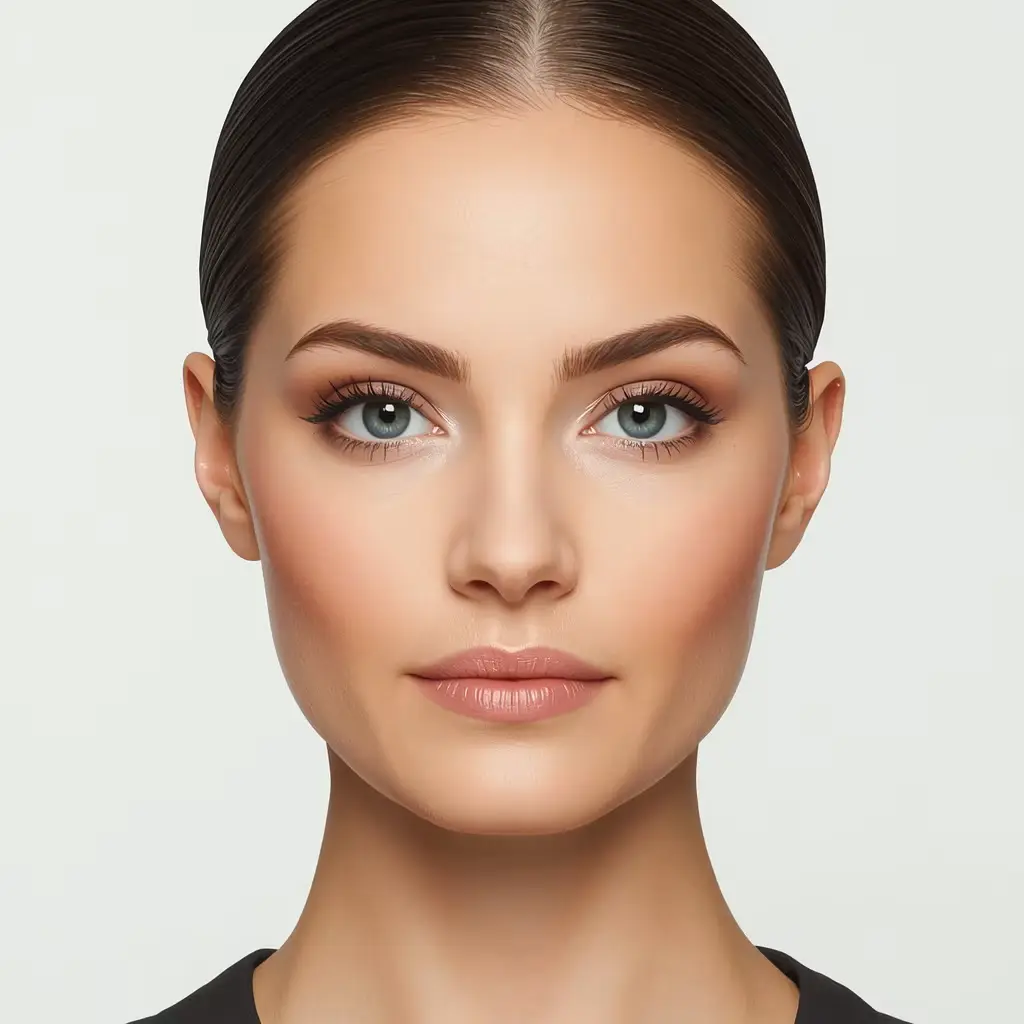
Portrait reference of a woman with a heart-shaped face, a wide forehead, and a tapered chin.Heart
HeartA wider upper face with a softly tapered chin.
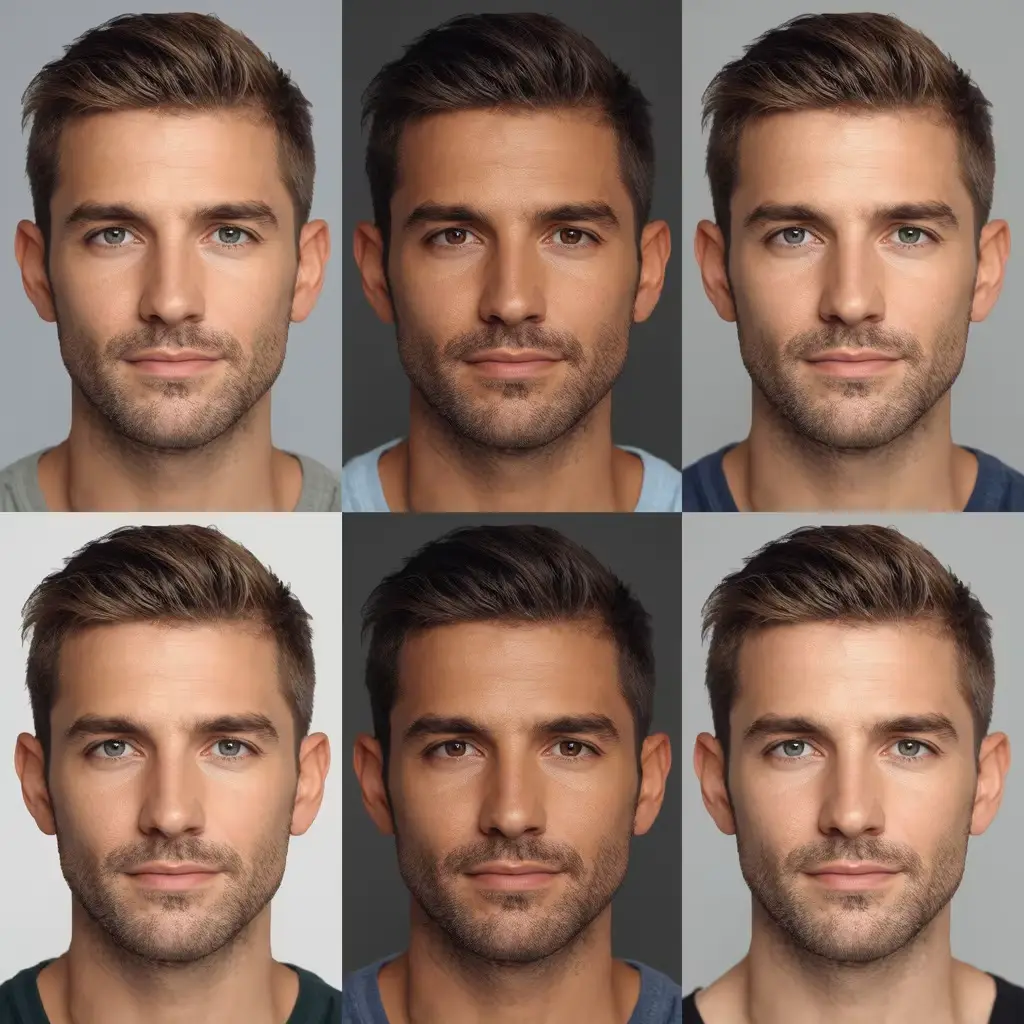
Grid of six portrait studies of men with triangle-shaped faces, broader jaws, and narrower foreheads.Portrait studyTriangle
TriangleA six-portrait study of a stronger lower face.
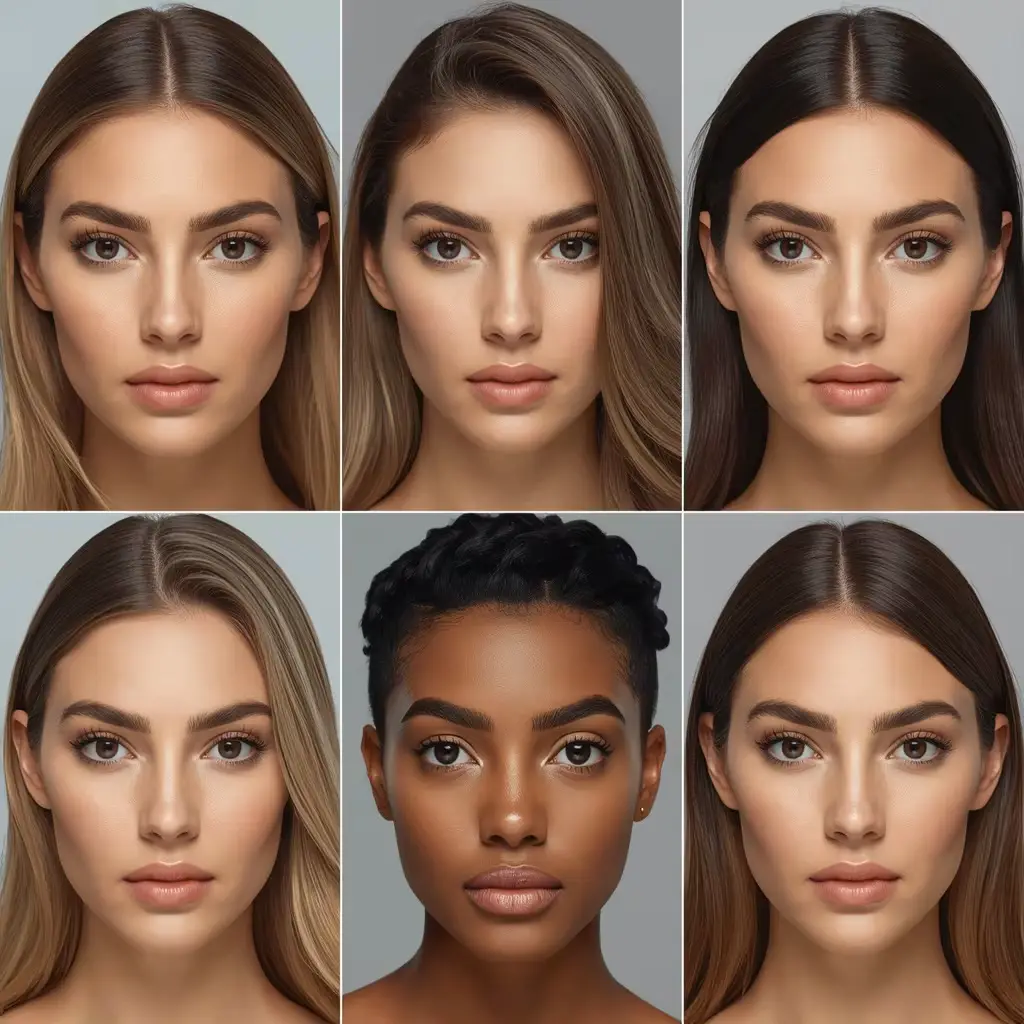
Grid of six portrait studies of women with square faces, broad foreheads, and defined jawlines.Portrait studySquare
SquareA six-portrait study of balanced widths and defined jawlines.

AI-generated reference portraits. A silhouette can show the direction, but your hair texture and growth pattern decide how it behaves.

The useful variables

Width, height, and where the eye lands.

Face-shape hair advice is mostly about silhouette. A cut can add width at the temples, create height at the crown, or place a horizontal line near the jaw. The labels are just shorthand.

If the face is compact

Vertical lift and an open forehead usually create more length than a heavy, wide fringe.

If the face is long

Horizontal movement, layers, and volume at the sides can break up the vertical line.

If the jaw is strong

Soft curves, asymmetry, and face-framing pieces reduce the emphasis on the corners.

If the forehead is wide

A curtain fringe or side sweep can soften the upper width without hiding the whole face.

What to tell a stylist

Bring the shape reading and the measurements, not just the label. A useful brief sounds like: “My cheek-to-jaw ratio is on the higher side, and I want a cut that adds a little width at the jaw without a heavy fringe.” That gives a stylist something concrete to work with.

Hair density, curl pattern, growth direction, and styling time matter more than a geometric label. A cut that ignores your texture will not behave the way a photo suggests. Use the guide as a shortlist, then adapt it to the hair you actually have.

If you are between two shapes

Choose the direction that solves the visual problem you notice most. If you want more length, borrow from the round-face suggestions. If you want less jaw emphasis, borrow from the square-face suggestions. You do not need to commit to one category.