Rectangular frames
A horizontal frame with a crisp lower edge and modest depth.
The straight line contrasts with soft cheeks and can add structure to a round or oval outline.
angularmedium widthcontrast
Suggested for: Round · Oval
Your choice is stored only in this browser.
LightDarkSystemFrame guide
Use proportion to narrow the shortlist, then check width, bridge fit, and lens depth. A frame that looks balanced on the outline can still be uncomfortable if the fit is wrong.
10 options across all seven readings
A horizontal frame with a crisp lower edge and modest depth.
The straight line contrasts with soft cheeks and can add structure to a round or oval outline.
Suggested for: Round · Oval
A stronger top rim with a thinner or rimless lower edge.
Puts visual weight across the brow line, which can balance a narrow forehead or a wider jaw.
Suggested for: Triangle · Oval · Round
A circular or softly rounded lens with a thin rim.
Curves soften a square jaw or an angular hairline. Keep the frame small enough that it does not repeat a round face.
Suggested for: Square · Heart · Diamond
A teardrop lens with a double bridge and a little more depth below the eye line.
The lower lens adds weight toward the cheeks and jaw, which can balance a wider forehead.
Suggested for: Heart · Triangle · Oval
An upswept outer corner and a slightly wider top line.
The lift draws attention to the upper face and can balance a strong jaw or add width at the temples.
Suggested for: Triangle · Square · Round
A gently curved lens that is wider than it is tall.
A low-contrast frame that follows the face without repeating a sharp angle. Useful when you want the face to lead.
Suggested for: Square · Diamond · Heart
A hexagonal or angled lens with a thin metal rim.
Adds a deliberate angle without a heavy browline. It can give a round face definition while staying light.
Suggested for: Round · Oval · Heart
Minimal rim with the lens shape doing most of the work.
Keeps the face visible and avoids adding another strong horizontal line. A good option when frames tend to overwhelm you.
Suggested for: Diamond · Heart · Oval
A larger lens with a soft square corner and a wide fit.
The scale can shorten a long face and the horizontal line adds width. Check that the frame does not sit on the cheeks.
Suggested for: Oblong · Oval
A slim, wide rectangle with a low lens depth.
A strong horizontal line that can make a long face feel shorter. Avoid if you want to soften a very angular jaw.
Suggested for: Oblong · Oval
Frame context


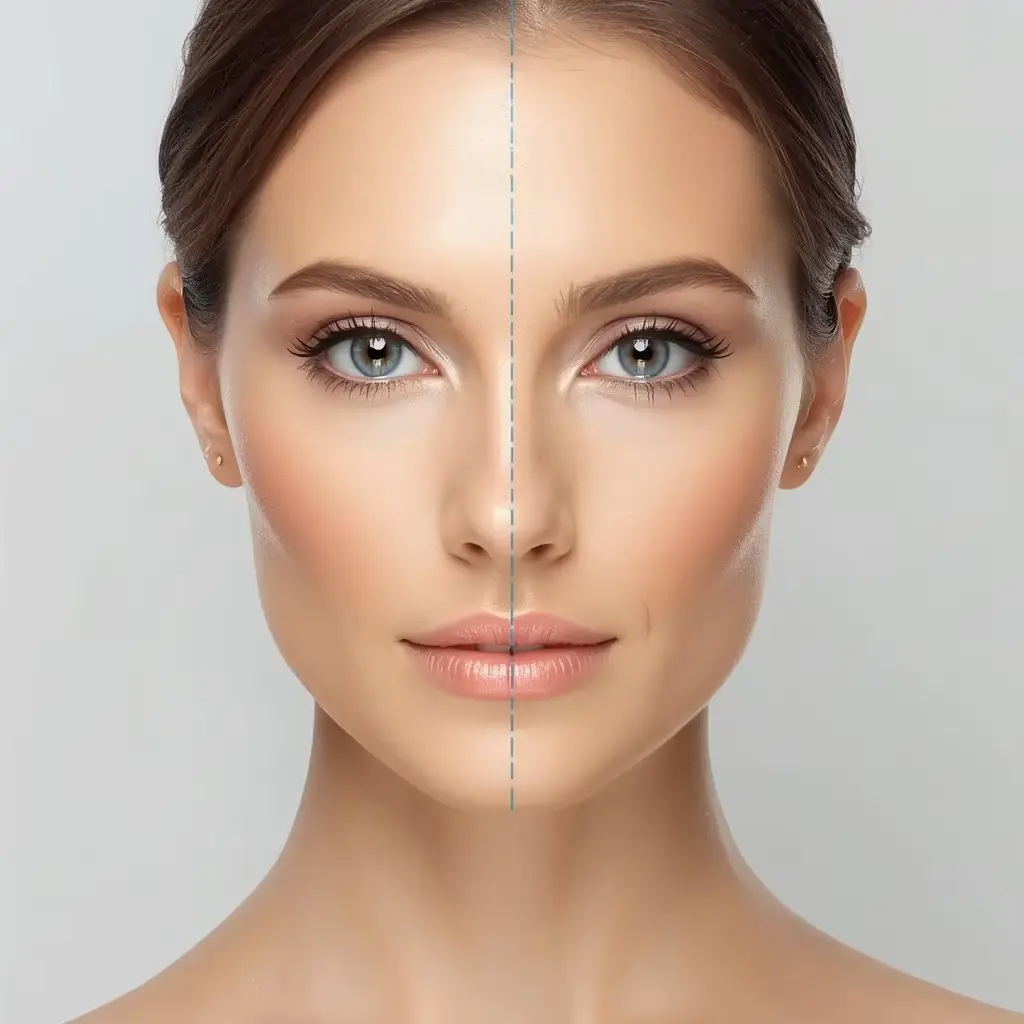
Frame width, bridge fit, and lens depth still outrank the outline. Use the shape as a shortlist, then try frames on.
Fit before style
Face shape can suggest a direction, but fit determines whether you will actually wear the frames. Check these before you fall in love with a shape.
01
The frame should roughly follow the widest part of the face without pressing into the temples.
02
The bridge should sit comfortably on the nose without sliding. A gap or pinch will undermine any style.
03
The lower rim should not rest on your cheeks when you smile. Lens depth changes the balance quickly.
A frame is a strong horizontal object on the face. Angular frames add contrast to soft curves; round frames soften a sharp jaw; a strong browline shifts attention upward. The face-shape labels help you predict that contrast, but the frame’s colour, thickness, and scale often matter just as much.
The detector can analyze a photo with glasses, but thick frames, strong reflections, and heavy tint can hide the cheek and eye contours. For the cleanest measurement, use a photo without glasses if you can. For frame shopping, the shape reading is a starting point, not a prescription for a particular pair.